
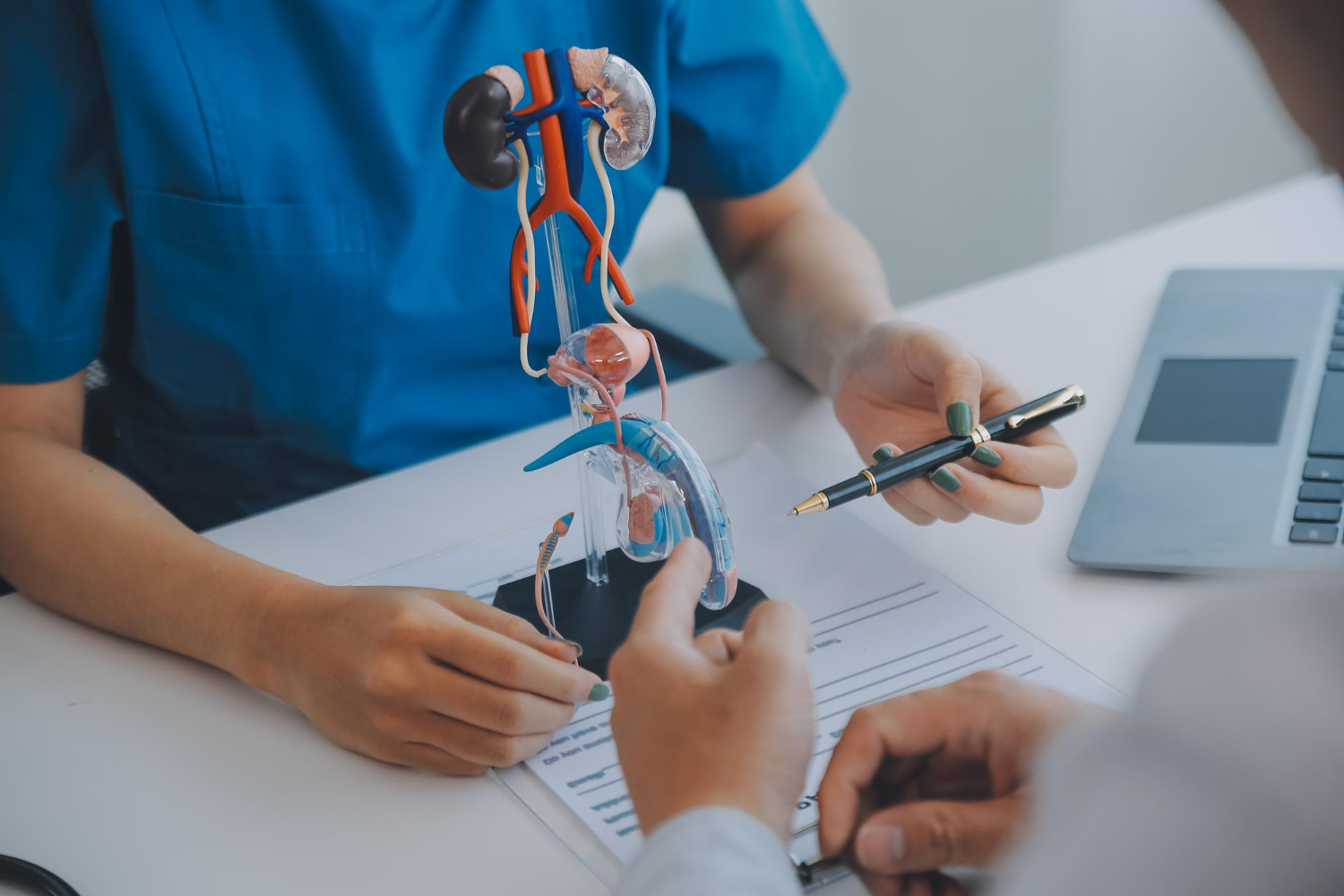
Urology services focus on the diagnosis, evaluation, and management of conditions affecting the urinary system and male reproductive health. Comprehensive urological care can help address concerns involving the prostate, kidneys, bladder, ureters, urinary tract, and male genital organs. Our services include prostatectomy, enlarged prostate care, phimosis, tight foreskin, foreskin infections, paraphimosis, balanoposthitis, balanitis, frenuloplasty surgery, stapler circumcision, circumcision, hydrocele treatment, URSL, PCNL, RIRS, and ESWL.
Prostatectomy is a surgical procedure involving partial or complete removal of the prostate, depending on the underlying medical condition. It may be considered for selected prostate disorders following detailed evaluation, diagnostic testing, and specialist assessment.
An enlarged prostate, commonly associated with benign prostatic enlargement, may cause frequent urination, weak urine flow, difficulty starting urination, or incomplete bladder emptying. Urological evaluation helps determine the severity and appropriate management.
Phimosis occurs when the foreskin cannot be retracted adequately. Tight foreskin may cause discomfort, difficulty maintaining hygiene, pain during sexual activity, or urinary problems. Treatment depends on severity and individual circumstances.
A foreskin infection may cause redness, swelling, irritation, pain, or discharge. Proper evaluation helps identify possible causes and determine suitable medical management.
Balanitis refers to inflammation of the glans penis, while balanoposthitis involves inflammation of both the glans and foreskin. Appropriate assessment can help identify infectious, inflammatory, hygiene-related, or other contributing factors.
Paraphimosis occurs when the retracted foreskin becomes trapped behind the glans and cannot return to its normal position. It can restrict blood flow and requires prompt medical attention.
Frenuloplasty surgery may be performed when a short or tight frenulum causes discomfort, tearing, or restriction. The procedure aims to release the tight tissue and improve movement.
Circumcision involves surgical removal of the foreskin and may be recommended for certain medical conditions. Stapler circumcision uses a specialized device designed to remove the foreskin and assist with wound closure.
A hydrocele is a collection of fluid around the testicle that can cause painless or uncomfortable swelling. Evaluation helps determine whether monitoring or surgical treatment is appropriate.
Ureteroscopic lithotripsy (URSL) uses a small endoscope to access the urinary tract and treat selected ureteric stones. Stone fragmentation and removal are performed using appropriate techniques.
Percutaneous nephrolithotomy (PCNL) is a minimally invasive procedure used to remove larger or complex kidney stones through a small access pathway into the kidney.
Retrograde intrarenal surgery (RIRS) uses a flexible scope to reach stones within the kidney. Appropriate energy-based techniques may be used to fragment stones for removal or passage.
Extracorporeal shock wave lithotripsy (ESWL) uses focused shock waves to break selected kidney or urinary stones into smaller fragments that can pass through the urinary tract.
Urological care begins with understanding symptoms, medical history, physical findings, and appropriate diagnostic results. Depending on the condition, treatment may involve medication, observation, lifestyle guidance, minimally invasive procedures, or surgery.
Professional urology services aim to provide timely evaluation, appropriate treatment planning, patient education, and follow-up care for urinary and male reproductive health conditions.