Introduction
Many women hear about hysteroscopy vs laparoscopy when facing gynecological issues. Both are minimally invasive gynecological procedures. However, they serve different purposes. Understanding the difference between hysteroscopy and laparoscopy can help you make informed choices. This guide explains each procedure, their uses, and what to expect.
What is Hysteroscopy?
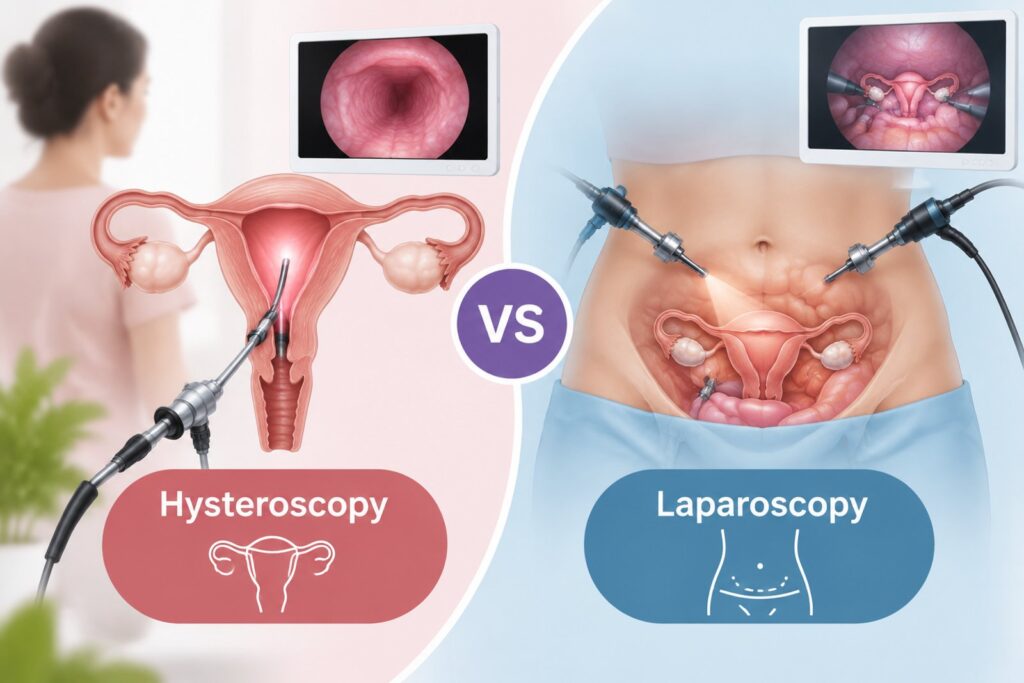
Hysteroscopy is a procedure that lets doctors look inside the uterus. They use a thin, lighted tube called a hysteroscope. The tube goes through the vagina and cervix. Because of this, there are no cuts on the belly. Doctors use hysteroscopy to find or treat problems in the uterus.
Usually, hysteroscopy is done in a clinic or hospital. Sometimes, it only needs local anesthesia. Recovery is often quick.
What is Laparoscopy?
Laparoscopy is another minimally invasive gynecological procedure. It lets doctors see the organs inside the belly, such as the uterus, ovaries, and fallopian tubes. Doctors make small cuts in the abdomen. Then, they insert a thin tube with a camera, called a laparoscope. This tool helps them diagnose or treat many conditions.
Because laparoscopy involves small cuts, it usually requires general anesthesia. Recovery may take a few days.
Key Differences Between Hysteroscopy and Laparoscopy
Although both are minimally invasive, there are clear differences between hysteroscopy and laparoscopy.
For example, hysteroscopy is best for problems inside the uterus. In contrast, laparoscopy is better for issues outside or around the uterus.
When is Each Procedure Recommended?
Doctors choose the procedure based on your symptoms and needs. For instance, hysteroscopy is recommended when:
On the other hand, laparoscopy is recommended when:
Sometimes, both procedures are used together for a full evaluation.
Benefits and Risks
Both procedures have benefits and some risks. However, they are generally safe when performed by trained doctors.
According to the World Health Organization, minimally invasive gynecological procedures have a high safety record. Still, every surgery has some risk. Always discuss these with your doctor.
Recovery and Aftercare
After hysteroscopy, most women go home the same day. Recovery is quick, often within a day or two. You may have mild cramps or light bleeding. Rest and avoid heavy lifting for a short time.
After laparoscopy, recovery takes a bit longer. Most women return to normal activities in about a week. You may feel sore at the incision sites. In addition, you might have mild bloating or shoulder pain from the gas used during the procedure. Follow your doctor’s aftercare tips:
For more details, see CDC and WHO guidelines on post-surgical care.
Frequently Asked Questions
Conclusion
In summary, hysteroscopy and laparoscopy are both important minimally invasive gynecological procedures. Each has its own uses, benefits, and risks. Knowing the difference between hysteroscopy and laparoscopy helps you ask the right questions. Consult a gynecologist Dr. Deepthi for personalized advice on hysteroscopy or laparoscopy.